
Finding the right solution can only happen when you define the right problem. It might sound easy, but as designers its often in our nature to rush ahead to designing solutions for applications or products based off a quick analysis. But most projects will require more research to define the big issues. Luckily, writing point-of-view statements, or POVs for short, can help you get to bigger and better solutions faster. These statements can apply to all types of projects, allowing you to identify issues from a user’s perspective. Only then, can we imagine the right solution to solve those user needs.
As an example, I will use my recent POV project to show you how I used user reviews to craft compelling statements that are direct and human centered. I researched three apps: MyFitnessPal, Strava, and Asics RunKeeper. After going through and sorting reviews into positive, negative, and suggestive categories, I saw a good representation of each app. I was quickly able to see the features that were loved, ones that were hated, and things users really wanted to see.
Positive Reviews
I first started with reading positive reviews. Reading these reviews gave me an understanding of why these apps were highly rated and what people loved about them. With MyFitnessPal for example, the positive reviews proved that the app is easy to navigate and provides great stats that help users stay consistent. Creating a group of users that have remained loyal to the brand for years.
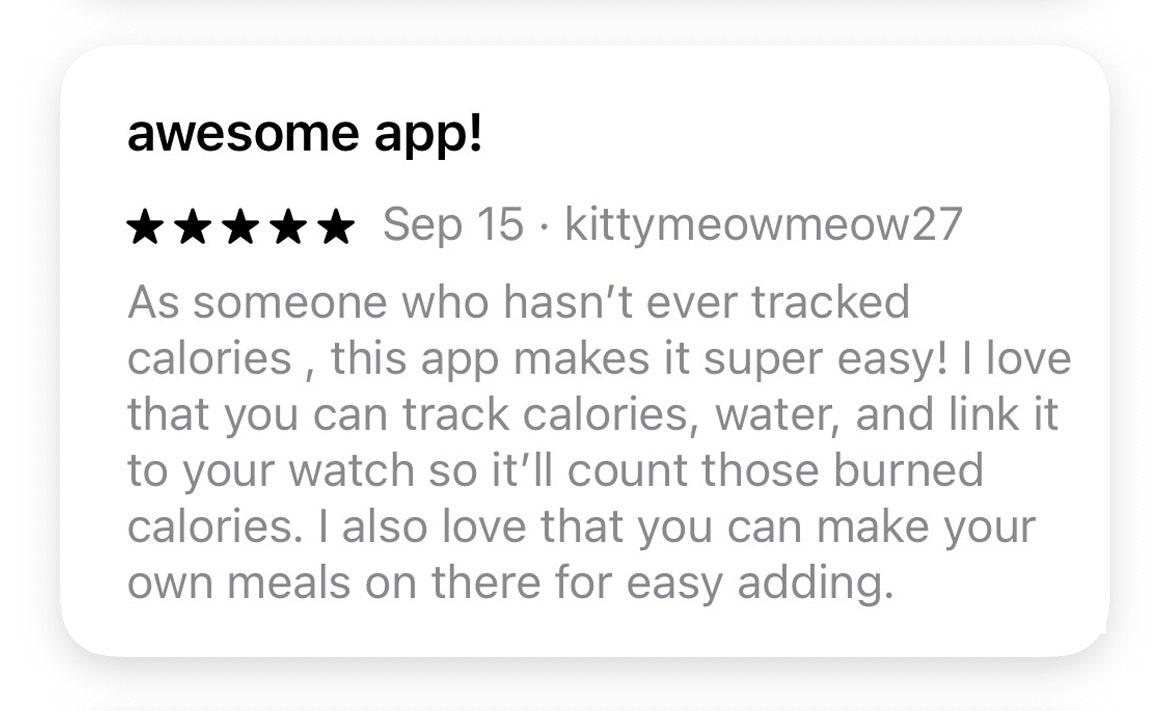
The review above shows that this user has all their needs met and is a happy customer! Proving that when an app works seamlessly, users continue to use the app for years to come.
Negative Reviews
Next, I read the negative reviews, which has a different kind of energy. These users usually seemed angry, frustrated, and gave the app one star. As I read, I could feel their resentment building. Most would just list one issue after another. The more they used the app, the more issues there were. Overall, the inconsistency is what turned users away most of the time, reiterating just how important updates and fixing errors are.
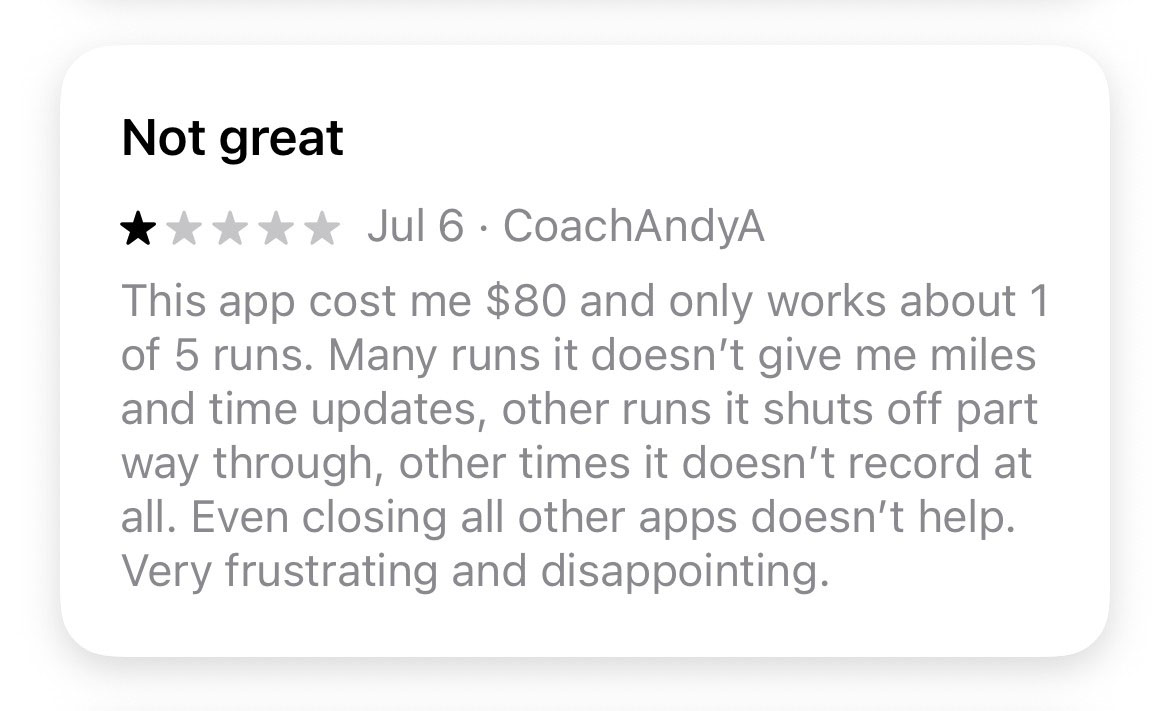
With the Strava app, users complained that the app only worked sometimes, with little to no reason why.
Suggestive Reviews
Lastly, I looked for suggestive reviews where users talked about suggestions and what they wished the app could do. These types of reviews are most helpful when writing POVs because they show you how your app could improve, even if its highly rated. Reading these types of reviews, where they suggest changes, bring both perspectives to the table. When reading about RunKeeper, a longtime user complained that updates were changing the app interface too much, making it hard to read and compare workouts.
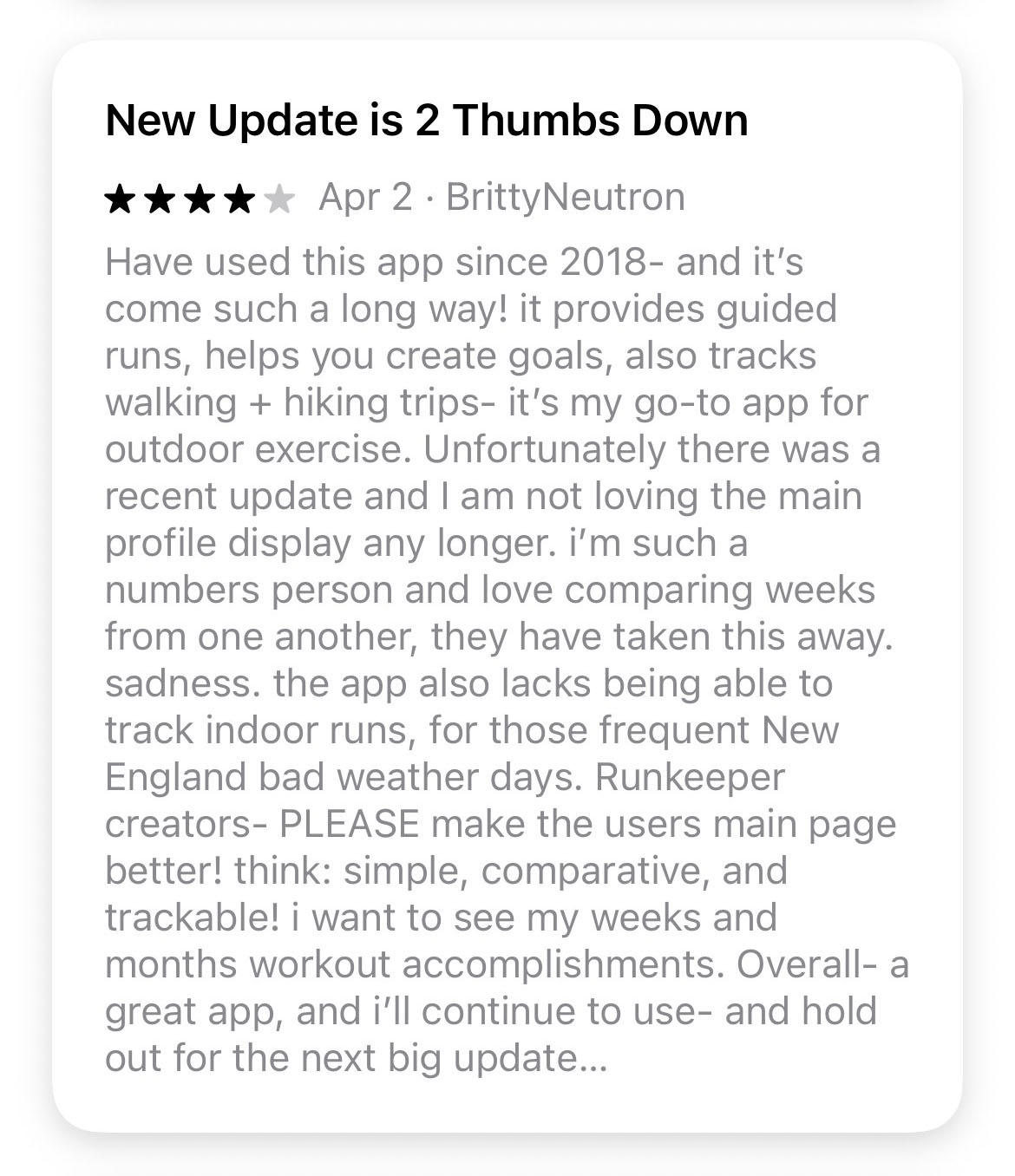
This user rated this app 4 out of 5 stars but still has a major issue with the homepage.
Crafting Point of View Statements
When it was finally time to write my POV statements, I gathered all my reviews and started to identify specific user types. Some may be distance runners while others may be more interested in tracking their food intake. I then focused on specific user needs that were mentioned. While the needs are important to identify, it’s even more important to think about the insights generated from these needs. Once these three parts were defined, I started writing my POV statements using this general structure:
____(descriptive user)____ needs ____(needs)____ because ____(insight)____.
This structure will help make sure your sentences are user focused and broad enough for creative brainstorming. But also narrow it down enough to focus on a particular issue. The problem mentioned should be actionable and the sentences should help you come up with solutions in the next design phase – the ideation phase.
Below are my two POV statements I wrote for the Asics RunKeeper app.
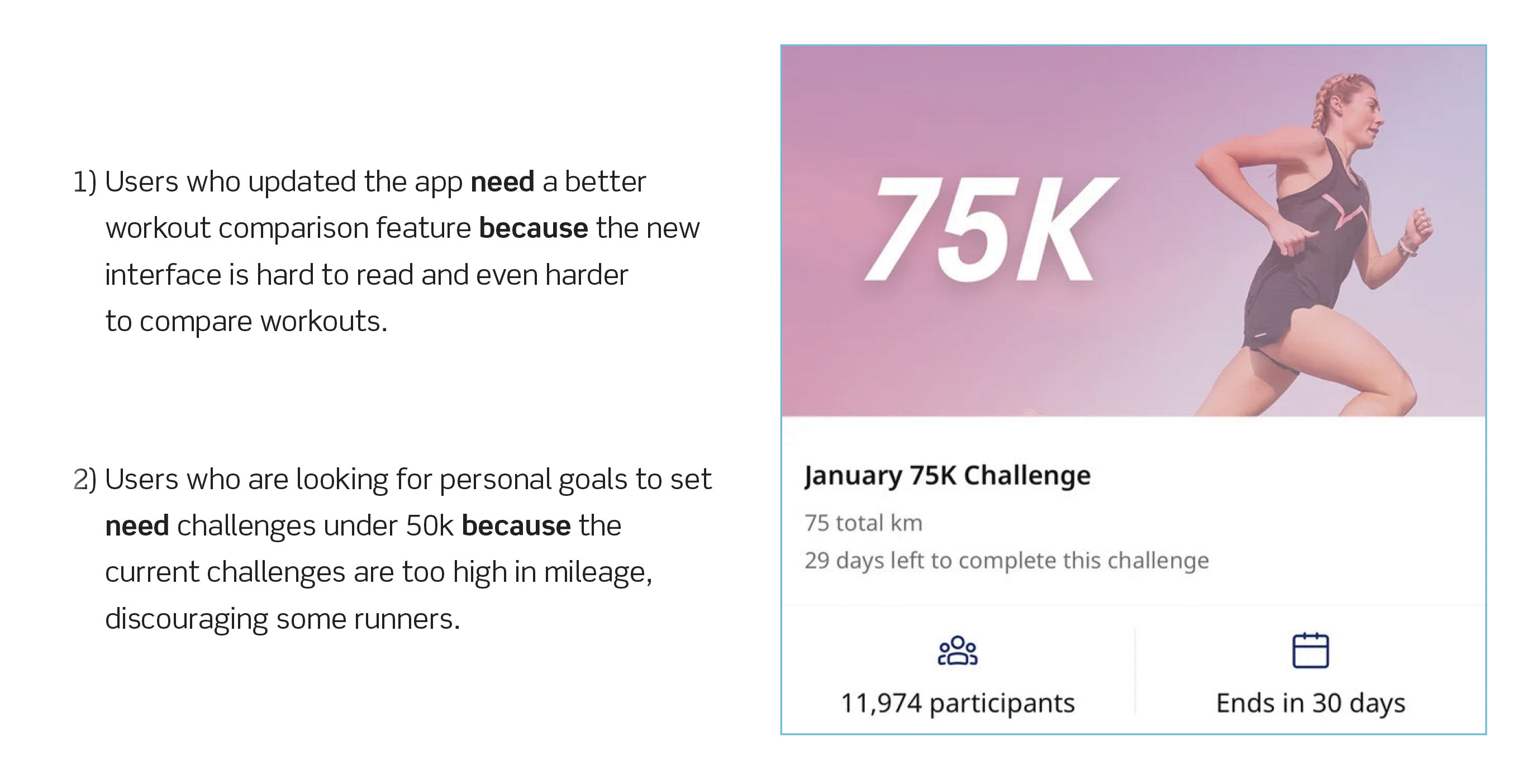
from the Asics RunKeeper app (on right).
As you can see, they focus on a particular user, while also identifying a need they have and why it’s important. Going forward with these defined problems is one step towards a better designed product. Once you start extracting POVs from your research, you’ll start to understand the importance of what your user is asking for and how you can deliver.
To read more about the project I did on these apps see the PDF below.

 The Creative Corner