
Brands and social media influencers have been collaborating for some time now. But not every partnership is a successful one. To create a profitable campaign, influencers should have the right audience relevance and high engagement on their own. Influencers that focus on a specific niche or are a leader on a specific topic are usually ones that do well. If a brand’s campaign objectives align with influencers and what they stand for, then a partnership can flourish. To demonstrate how to go about collaborating and creating with others, I chose the brand Ka’Chava to create a mock influencer marketing strategy.
If you’re unfamiliar, Ka’Chava is a meal-replacement shake that focuses on whole foods and superfoods for optimal nutrition. Making it a healthy alternative for busy people who don’t have time to cook and are trying to eat better. It’s marketed as an organic superfood and claims to be the healthiest shake on the market today.
To find the right social media influencers that would be good partners for Ka’Chava, I used StormyAI, which is a website that helps you find influencers of a certain genre. When searching, I used keywords like “influencer focusing on healthy food”, “recipes” and “healthy lifestyle”, refined my search to TikTok and Instagram, and made sure they were U.S. based with at least a micro-influencer (~100k followers) status.
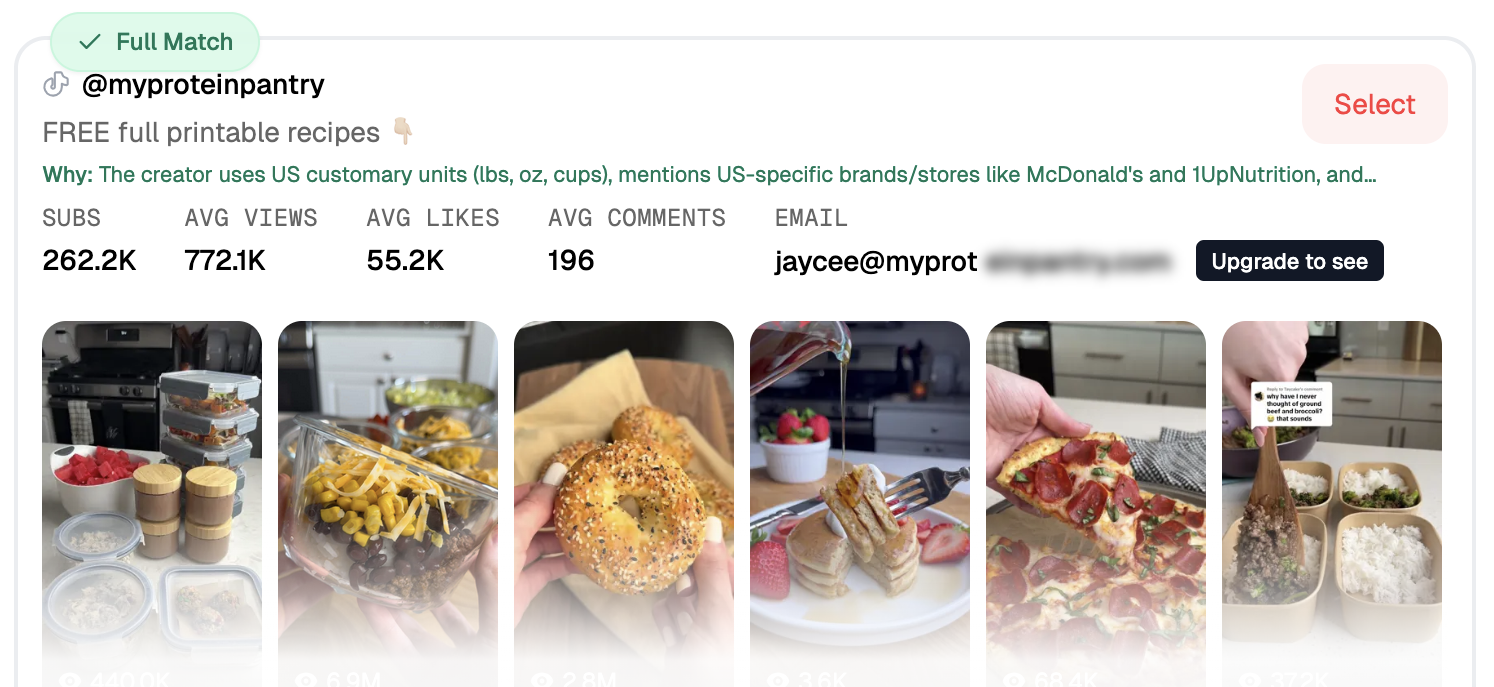
The first influencer I found is @myproteinpantry, posting on TikTok and Instagram. I chose her because her entire page is food based, where she shares meal ideas and healthy alternatives. She has a high follower amount of 262k, with millions of views on her top videos. She also has high engagement on videos, considering her following. She would make a great partnership with Ka’Chava because her audience base are people who are looking for easy DIY meals.
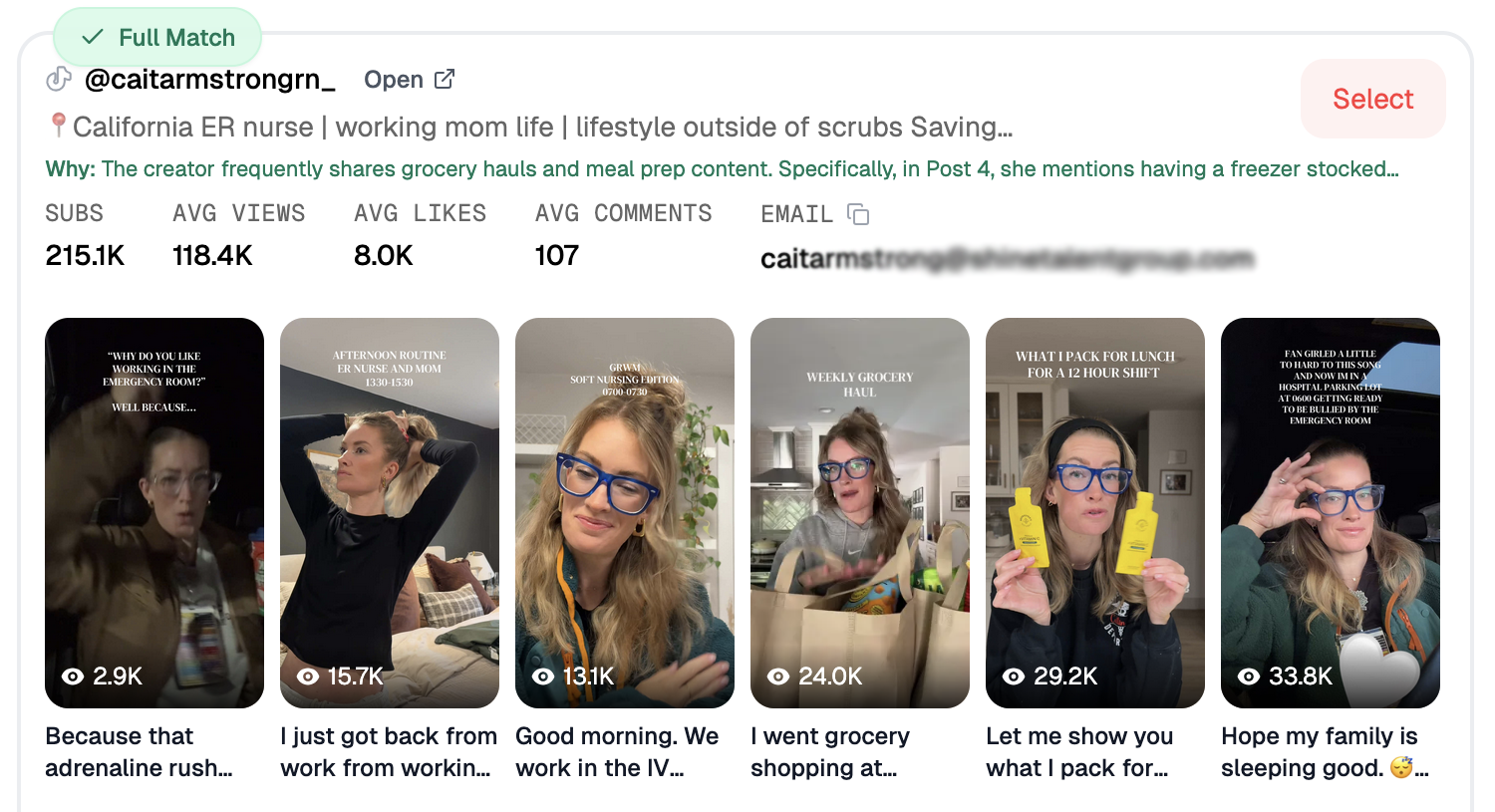
Another great influencer partnership would be with @caitarmstrongrn_. With 215k followers on TikTok, she is also considered a micro-influencer and gets high engagement and comments on almost all her posts. I chose her because she has content that is related to groceries hauls, meal preps, and meals to packs for her 12-hour nursing shift. Some of her most popular content is focused on her lunch meal preps, where she already has some health food partnerships. Ka’Chava would fit in nicely with this type of meal-prep content.
These collaborations would be a sponsored post where both @myproteinpantry and @caitarmstrongrn_ would promote the Ka’Chava brand. The goal for the campaign between these two influencers would be to get better brand awareness and reach. I say this because partnering with influencers can help a larger group of people organically learn about the brand from someone they know and trust. These influencers may have a slightly different audience than Ka’Chava does online, but they are still similar enough where this new audience should resonate with this campaign. Having Ka’Chava reach into the “foodie” space online, they will reach more than just the health conscious, all while focusing on a new group of people who can be converted into lifelong customers.
Since @myproteinpantry has great engagement and views on TikTok and Instagram, it makes sense for her to advertise on both platforms. But I noticed @caitarmstrongrn_ has more of a following on TikTok, than Instagram. So, while it’s smart to use multiple platforms for a social campaign, it should be noted that we don’t expect too much revenue coming from Caitlyn’s Instagram. What makes her a good choice still is that she promotes other health food products, both paid and organically.
The type of content these influencers would create would be “recipe content”, meaning they could each explain how and when they use Ka’Chava in their busy schedules, and show themselves making one in the video. I envision them also talking about the flavors offered, the great taste, the nutritional benefits and the high-quality ingredients. All while giving out a special link so that the brand can track conversions from each platform and influencer.
To measure the success of these partnerships, Ka’Chava would want to track engagement and sentiment of the brand during this campaign run. Especially within the comments of each video. Tracking conversions is also important, so seeing how many people clicked the offer link (click-through-rate), website views, and how many people purchased is of high relevance. If I was in charge, I would use TikTok Ads Manager and Instagram Insights to track KPIs. This will allow me to see what platform performed better and see where this new demographic spends their time. Tiktok Ads Manager in particular is good for viewing the campaign’s performance for engagement and conversions.
While this campaign seems airtight, one challenge I foresee in measuring influencer success is that some followers may see the video but not use the promo link to purchase. This would skew the data because while they were influenced by their favorite creator, the sale wasn’t made with the special tracking link. To address this problem, Ka’Chava can monitor overall website traffic, search volume, and final sales during this campaign period. This way they know they are reaching new customers, increasing sales, and having a positive ROI. It’s also important to remember your influencer size. Since I picked micro-influencers, this campaign may not reach a large audience, one that Ka’Chava may be looking for. While the brand is still young, I think starting a social campaign this way is for the better. The partnerships are still relevant and strong, and testing multiple platforms helps Ka’Chava find their specialized audience that want their shakes. With strong brand and influencer partnerships, social media becomes a powerful tool to drive engagement and business growth.

 The Creative Corner