
This week, I focused on another one of my favorite brands, S’well water bottles. While some may only know of the popular Stanley water bottles, there was a time when S’well was extremely popular in the industry. While still being a strong force, I decided to examine their audience targeting strategy and look at how they could create custom and lookalike audiences to gain more customers and convert more sales.
A custom audience is important for any brand when advertising because it allows marketing to reach people who have interacted with the brand or relate to their message in a strong way. Creating a lookalike audience can help any brand expand their reach and target similar, new users who are likely to purchase.
Once we know what types of consumers are attracted to S’well products, we can improve their social media campaigns. After researching their socials and their website, I concluded that their audience characteristics are going to be young, environmentally conscious, 25–35-year-olds. They live an outdoorsy, active, healthy lifestyle and include individuals who need function and style in their reusable products. These consumers are interested in outdoor sports but also care about aesthetics. S’well would probably focus on locations where there is a high number of young professionals, who care about the environment like New York, Austin, and Los Angeles.
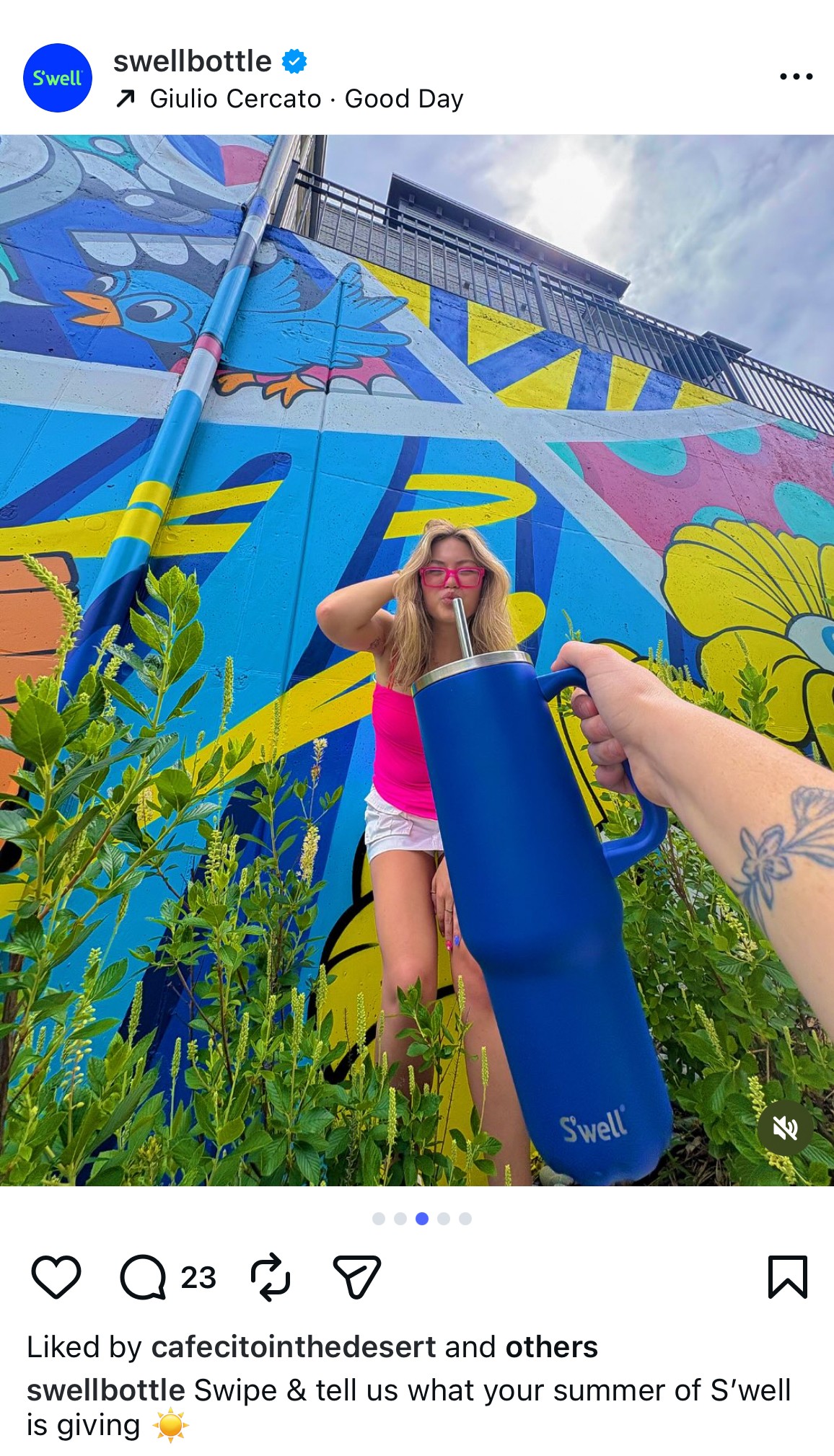
With segmentation, S’well will be able to connect to consumers with these characteristics and make sure the brand’s message is shown to the right people. They should put these ads in front of young professionals that care about the environment but also like premium lifestyle products. Targeting the active hobbyist and the young professional, S’well can show how their brand aligns with their customers’ values. For example, they could show the outdoorsmen that they care about sustainability and reducing single-use plastic. For the young professional, they could showcase the variety of colors their bottles come in, to match any outfit and how it fits easily into cup holders and backpacks. Aligning the message and creative to a certain audience will help avoid wasting ad spend on people who don’t resonate with this product. Segmentation keeps conversion rates high and ultimately creates a higher return on investment.
Taking it one step further, S’well could create custom audiences that help conversion rates even more. One way to do this is by tracking cart abandoners. Since S’well is probably being overshadowed by larger bottle brands lately (like Stanley), they should start targeting people who are “shopping around”. By tracking cart abandoning, they can advertise to this specific group of people. Showing them how S’well is better than the other guys. They could show the different colors, their special prints or the gift sets that set them apart. I believe, especially in this day in age, many people shop around for the best price, and this is a great way to see what consumers are looking at, where they dropped off on the website, and convert high-intent shoppers into purchasers. This custom audience could see an ad reminding them of what they were interested in and what else can be bundled with it, maybe even alerting them of a discount.
This custom audience can help with re-targeting and increasing conversions because it helps users remember their abandoned cart, sometimes weeks after they visited. This is usually much more effective than acquiring a brand-new customer who may have never heard of S’well. Re-targeting gets users who already know and admire the brand. So, advertising to them can be personalized and promote offers, rather than preaching to a broader audience, which naturally carries more risk.
If S’well wanted to expand their reach, they could create a lookalike audience. To do this, they should first identify their source audience. Which would start with repeat buyers, active and young professionals who are influenced by wellness trends, and corporate buyers. From there they can find new customers by finding people who follow a competitor’s brand. So, looking to see who follows and likes Stanley water bottles on social media can be a good place to start. They can also target people who follow similar eco-friendly brands, like Patagonia. These consumers probably live an active lifestyle and also want to support brands who support the planet and limit waste. Finding these people should mirror your top buyers, meaning that you should get new sales from them, all because they resonate with what you’re advertising.
To see a real audience segmentation campaign in action, you can read about S’well’s Million Bottle Project. This campaign was geared towards students and teachers in New York City and aimed to displace 100 million plastic bottles by 2020. The campaign advertised focused on New York and worked with the NYC’s Mayor’s office to get the word out. S’well’s social media channels also posted about the campaign (see video above), explaining why this cause was important. They also asked viewers to take a pledge to stop using single use plastic and use a S’well bottle instead. The campaign not only made a positive impact on young people and the city, but it also created a 98% positive sentiment across social media for the brand. This campaign helped launch S’well into a large powerhouse brand 7 years ago. By focusing on a heavily populated area, S’well was able to focus on these locals who are busy and need re-useable resources. Eliminating plastic in NYC greatly benefited the community but also increased brand awareness for S’well.
As you can see, audience segmentation is important for any brand because it allows companies to put their ads in front of the right people. Without it, S’well would be sending out brand messages into the void, reaching many people, but just not the right people. By using segmentation and custom audiences, all brands can reduce wasted marketing spending, increase conversions, and build a lasting relationship with consumers who understand and appreciate their brand. With personalized, targeted ads, companies can create more loyal customers and effectively deliver their message to the right crowd, at the right time. Using this approach is not only effective, but proven to increase any companies bottom line.

 The Creative Corner