Since I have been learning social media marketing, my usual scrolling has been forcing me to look longer at the ads that come across my screen. I find myself analyzing brands that I follow, and critique the ads that are shown to me. One brand that has been advertised to me on multiple social platforms is Turo. They are a rental car marketplace, where locals rent out their own cars. At first I scrolled right by, but after seeing the ad a few more times, I decided to dig deeper into the brand and their advertising style.
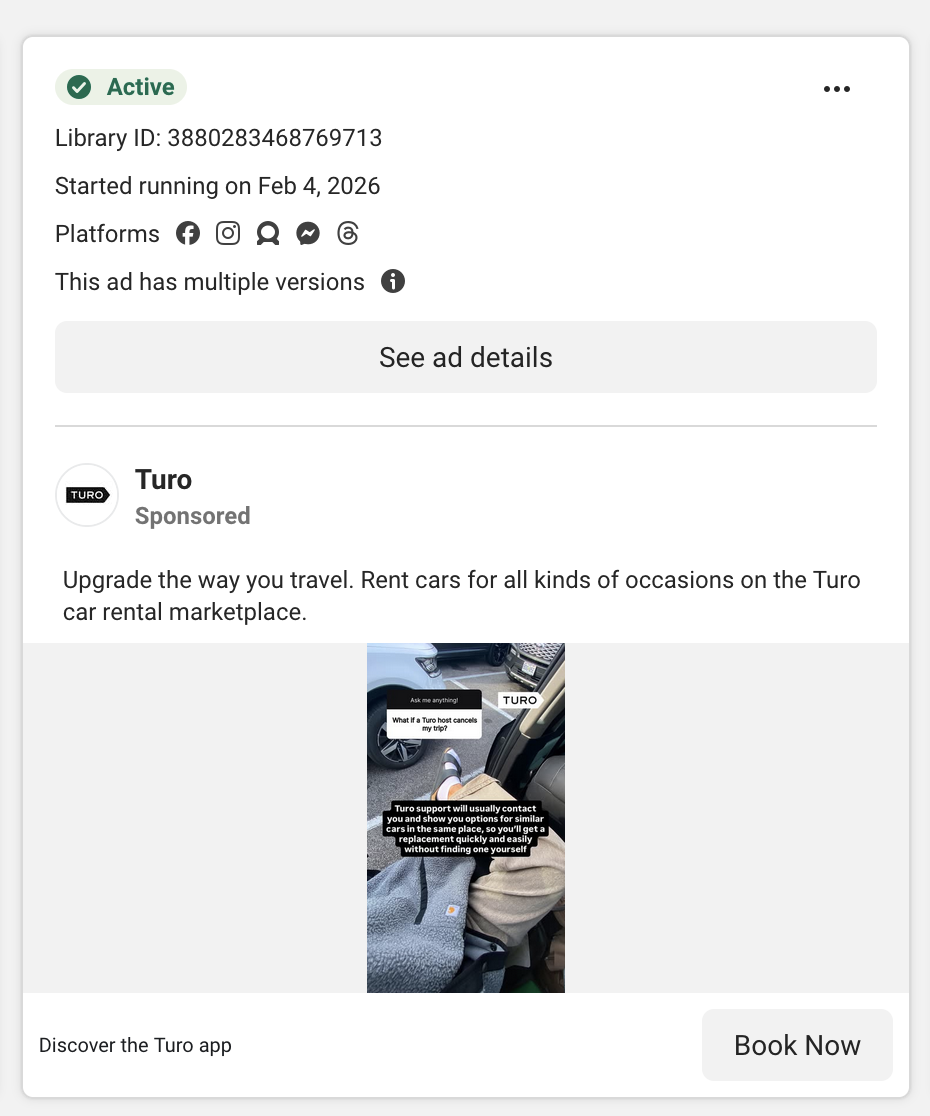
To start my research, I used the Meta Ad Library where I was able to see all of Turo’s most recent ads that are on Facebook and Instagram. I found the specific ad that kept bombarding me on Instagram so I decided to focus on this particular one going forward.
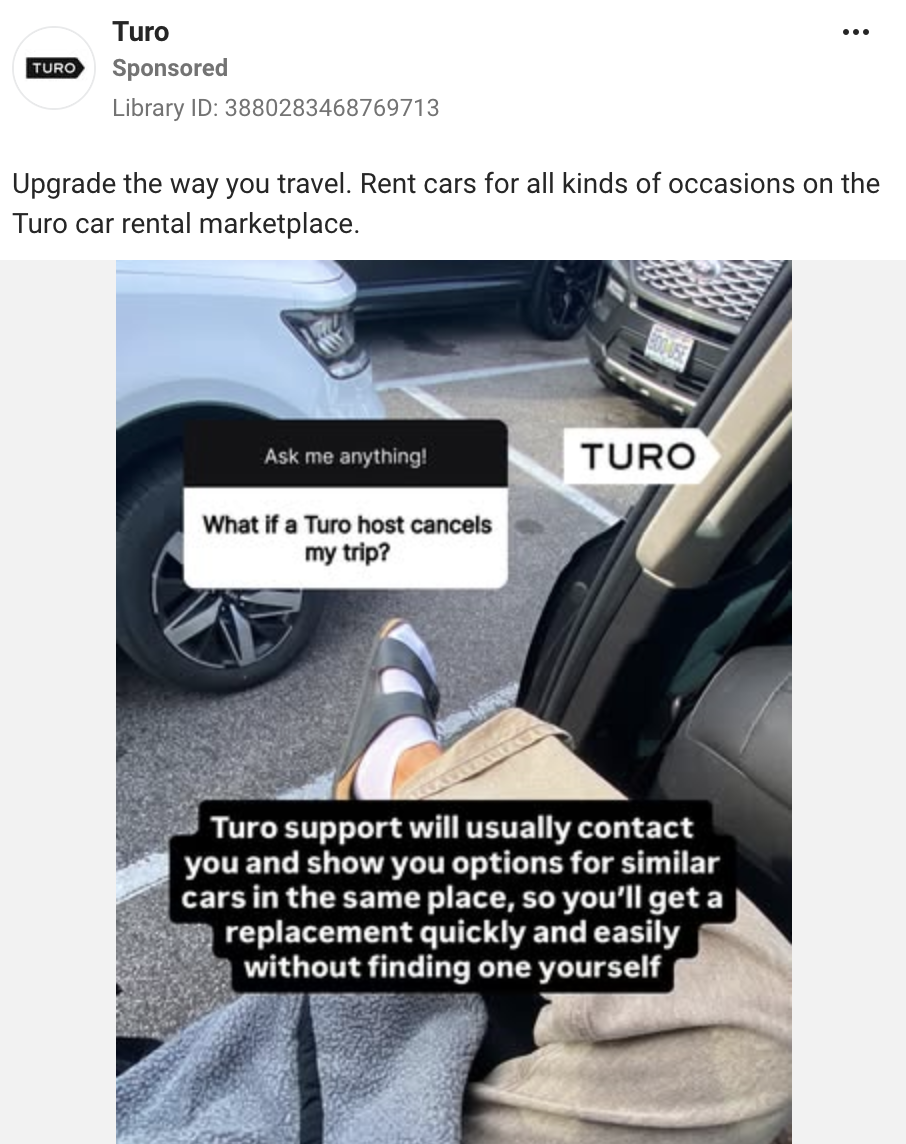
It seems that the brand is focusing on conversions, based on the “book now” button that appears on all the ads. The button drives traffic to their homepage which encourages me to click around and see what cars are available in my area. They also may be tracking engagement because the ad has a question-and-answer style. It shows a customer question and Turo’s answer to this person’s inquiry. While at first the image feels like a strange format for an ad, I still think it remains affective. Looking like an Instagram story, it easily attracts a young demographic, while also explaining how Turo works. Plus, with the call to action, it guides me to click and learn more.
Since I was specifically targeted with multiple Turo Ads over the past week, this does give me some insight into who else is seeing these ads. Once observing their ad style, it seems safe to say they are targeting young professionals aged 25-35. This would be the demographic that would need cheap travel cars and be interested in booking this service over an app, rather than going to a rental car counter.
Using WordStream’s Facebook Benchmarks, I was able to estimate their performance based on overall industry outcomes. I found out that the click-through-rate should be around .80%, which hits about average for the platform, across multiple industries. The cost-per-click is probably around $2.24, which is higher than average. Meaning, the campaign may be spending more than normal to get the ad in front of customers.
The engagement rate for the overall auto industry according to SocialiInsider, is lower than other industries, with only .4% engagement. After hearing about this, I wondered if this is because they just bombard people with ads, overexposing them to a point where they just scroll by. Which was my own experience with Turo. The article also told me that the best platform for engagement is usually TikTok and Instagram and involve videos. Which I did not see Turo doing.
While it seems that the brand is gaining traction in the auto space, there is always room for improvement. One idea to optimize their ads is to try a new ad format. Showcase user-generated video content where we get to the see the cars. This was my first thought when I came across the ad- I couldn’t tell what was being advertised. Having better creative could help the conversion rate and increase curiosity. My second idea is to write better taglines. For such a young brand, the writing could improve and really help grab the attention of their viewers. Maybe even offer a special promotion. Young people on budgets may be more interested in trying it out if there’s less risk on their part.
Turo’s social media campaigns demonstrate their understanding of consumer needs. At first, I was skeptical about their ad placement and choices. But after researching and proposing some refinements, I could see them rising to become a more popular brand. More engaging, more approachable ads that really drive their message home. With stronger social campaigns, Turo could really stand out and be a popular brand among young travelers.

 The Creative Corner