A well-curated social media campaign can help a brand create awareness, increase customer engagement, and ultimately increase sales. But with every paid campaign, in order to succeed, there must be thought behind it. Identifying your audience and defining measurable goals are the most important steps for every campaign’s success. This week I was able to dive into Facebook Ads Manager to create my very own social ad, but not without a plan. Below, I will show you just how I narrowed down my audience while still creating room for reach and driving sales.
Define it
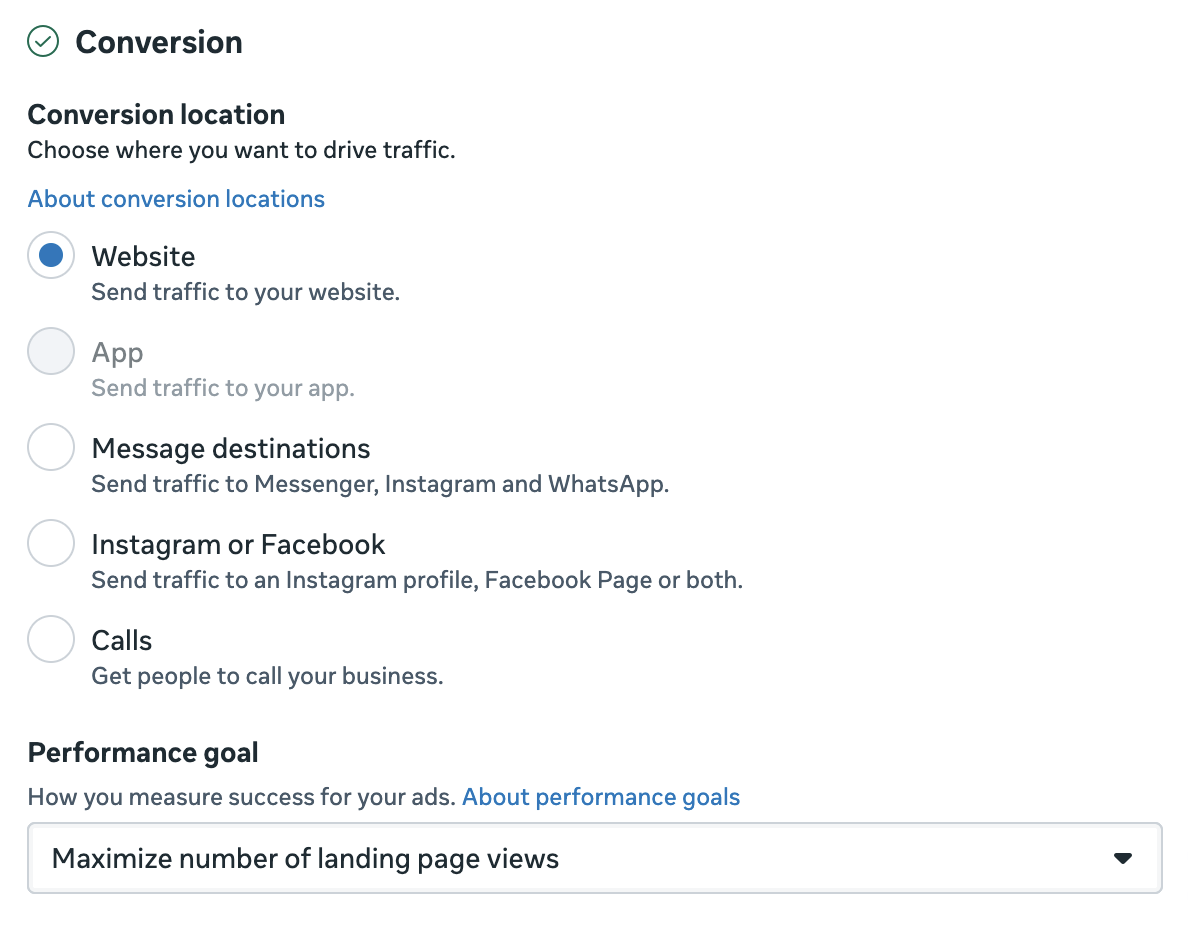
I decided to create an ad campaign for a gardening company that sells beginner growing kits to help newbies take care of their plants. This ad was going to be a pre-spring sale where the kit would be 10% off. Once I had my product and business in mind, I started defining my campaign objectives. I knew one goal would be to drive brand awareness through the ad, but I also wanted to focus on conversions. In this case, I chose conversions like measuring how many people come to the landing page and how many final sales I get. Because I envisioned making a special landing page for this sale, this type of click and revenue would be easy to track. To do this, I can chose to send traffic to my website under the conversion tab.
Budget and Schedule
Up next I decided on a budget and schedule for the ad. I first imagined the price of a typical grow kit for a plant, which would be around $30. So, in order to help make the campaign successful, I kept the daily spend at $10. This way we minimize financial risk, while still gathering data and consistently advertising. I then set the ad to run for 30 days, which should give it enough time to show any patterns in data and sales. Running an ad for too short of a time could disrupt data trends, making you guess about your audience’s behavior. So, to be safe, thirty days is the typical benchmark.
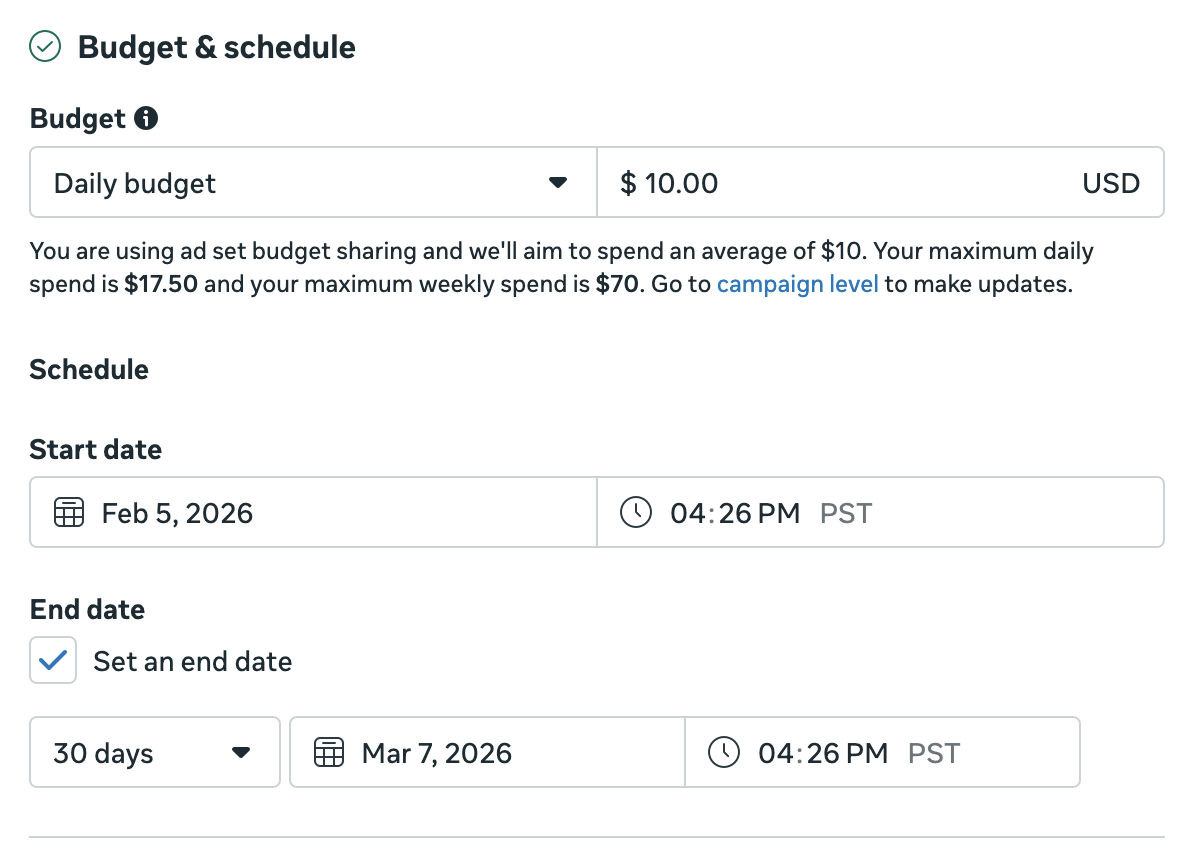
To measure success, I am aiming for at least 300 total clicks, which will lead to my landing page. Making my cost per click (CPC) $1.00. With my product being sold for $30, I will need at least 10 sales to break even. So, I am aiming for a conversion rate of around 2-3%.
Targeting
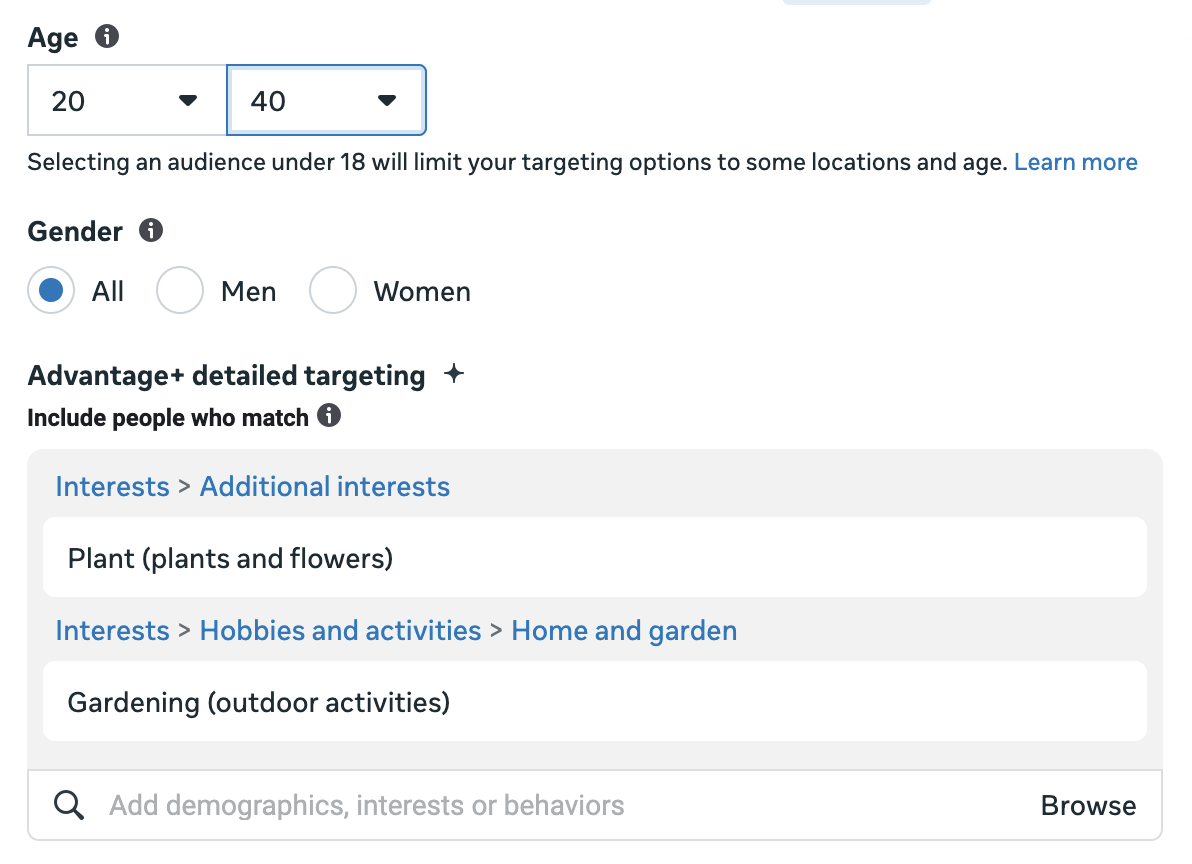
I also wanted to focus on targeting specific audiences. This is important to remember because you want to create relevant content and show it to people who are interested. Knowing the typical person that enjoys, interacts, and buys your products gives you insight into who you should be targeting. Targeting should also lead to higher engagement in ads and encourage brand loyalty because users won’t feel bombarded with the content. For my plant ad, I narrowed down the age range from 20 – 40-year-olds and chose both genders since growing plants are common among Millennials and Gen-Z. From there I chose specific interest-based targeting to narrow it down even more. As you can see in the screenshot below, I chose plants and gardening as two interest topics that will help Facebook match my ad with people who like these hobbies. Of course, you can add more or less topics to make your ad as broad or as narrow as you need.
Platforms
Then I chose the platforms my ad would appear on. Facebook and Instagram made the most sense for me, so I could try out cross-platform targeting and get a more diverse audience. If this is your first time trying the campaign, choosing more than one platform may be helpful to get better reach and see where most of your audience scrolls.
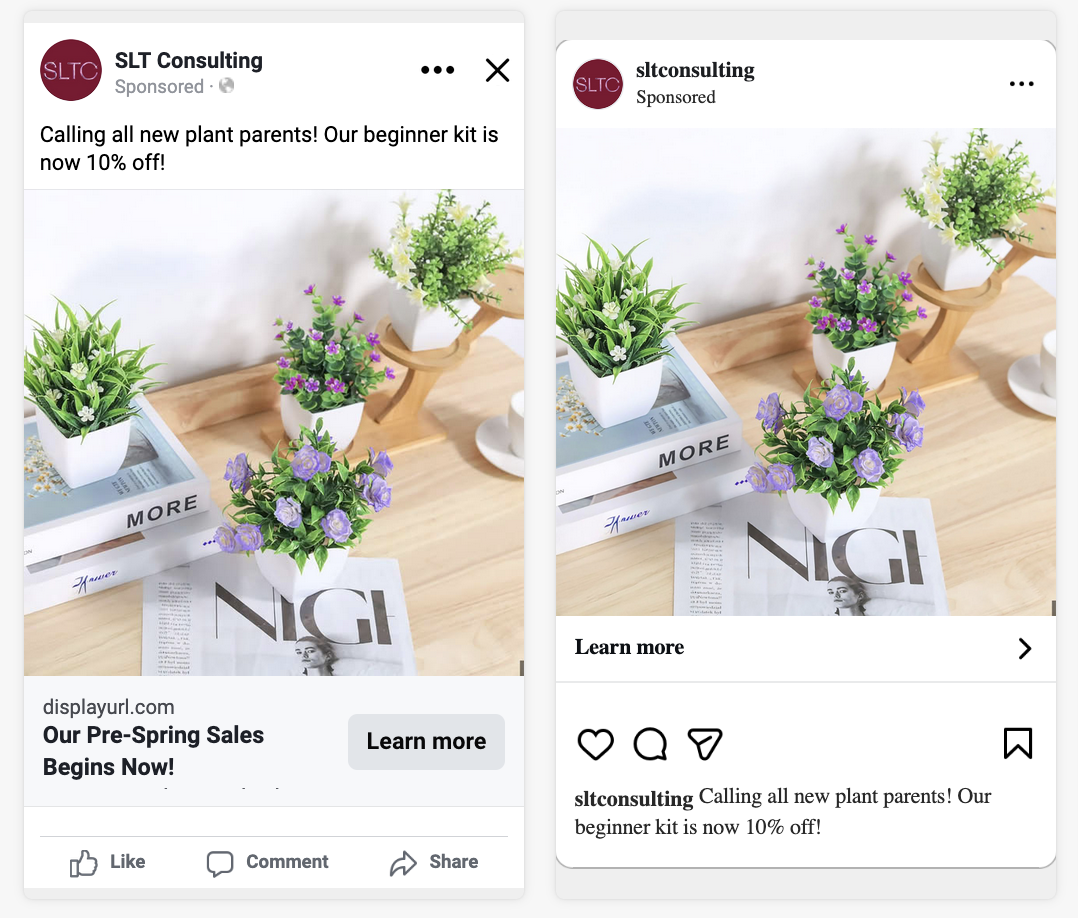
Once I had these details in place, I was able to create the image, header, and tagline for the ad. Above is the final look. All our audience will see is a beautifully created ad. But what they don’t know is how we carefully picked our audience, our budget, and overall strategy to put this post right in front of them. Allowing us to track and gather data, all with a single image ad. With clearly defined objectives, you too can reach the right people to create successful conversions for a brand. This process proves that advertising works when strategic planning and creativity come together and that there’s room for all types of social campaigns; you just have to find your space.

 The Creative Corner