
Reading & Writing
Planning a Podcast: Creating even a short podcast requires plenty of pre-production work. Most often, you will need some sort of script or at the very least an outline of what you will be talking about. There are of course pros and cons to writing a full out script, for example, you don’t want to sound like you’re reading straight out of a book but also don’t want to wing it and forget your most important points. So having a script with you can help your recording go smoothly.
Your script should start with a powerful opening or welcome message that captures attention right away. After that, you may have a “Thanks for listening” or Thanks for choosing us” line to create a connection with your audience. As you finish up these parts, you should be able to naturally go into the episode introduction and talk about each major point you wrote down. Usually, you would end the podcast by asking the listeners to subscribe or listen to another episode. Each step you write down should easily flow into the next part. After finalizing each step, your future episodes should follow the same format.
It’s also just as important to have your words capture your audience early and show how this content can benefit them. As we all know, podcasts are best when they feel like a natural conversation. So, write your podcast in your voice, your personality should shine through as you speak. There is also no need to be formal and keeping sentences short is usually best for most audiences.
Writing a Podcast Script: Before you create a podcast script, know the different kinds. The first option is writing one word-for-word. This route may be better for first time podcasters, since you won’t miss any talking points. This type of script will help you build confidence early on and may be needed for complex topics. But you risk the chance of sounding monotone. Some listeners may catch on that you’re reading from a script, and your audio could lose its genuine feel. Most of the time when we read out loud, we forget to add our personality. So, remember to evaluate before you take the time to write your episode out word-for-word.
For a middle ground option, try writing a detailed podcast outline. This way allows you to stay flexible yet also detailed. You will stay on track when talking about your main points and also sound naturally yourself when you speak. To do this start with writing out bullet points for top level topics you plan to talk about. Then expand on those ideas, adding in detail. Sentences should be brief but also contain valuable information that keeps you talking. For a single podcast episode, you shouldn’t need more than ten bullets of information.
For a looser option, try only writing a bulleted list for your episode. While this is the quickest route, it may make you miss valuable points in your story. A list only shows the themes or broader topics, so you should know your subject well ahead of time. This will surely help your podcast sound more active; however, some content may get lost or even out of order. This option is more for the experienced podcaster, who knows how to connect one idea to another.
Podcast Taglines and Hooks: Writing taglines and hooks for your podcast can help it stand out from all the others. For example, the tagline you start with on every episode can become your personal brand. After using a tagline a few times, your audience will remember and recognize you more. They will even feel more connected to your content. The key to a good tagline is making it clear, direct and simple.
One option is writing it as a two-step process. This combines your introduction of who you are/what the podcast is, with then telling them what the podcast can do for them. A good tagline will help us know what the show does and what they talk about. It should be short and of course catchy.
Another version is the bio format. This can usually be found with more famous podcasters who may be known for other things. Writing a tagline like this talks about the “brand” behind the microphone, while also giving a more biographical introduction of the person’s history.
These tips also work when writing section headers or unique hooks. Most podcasts have reoccurring sections or topics in each episode, so it’s important to have a creative title so the audience can easily navigate the podcast. In the very least, creating a great hook will help keep your content memorable and keep new and old listeners engaged.
Best Podcast Tools Around: While podcasting has become easily accessible for most of us, it can become hard to know what tools and equipment are best. So below are three tools I think would help any future podcaster.
The first is buying a good mic. Now not all mics will do the same job and usually there is a tradeoff of price verses quality. But the Samson Q2U mic is known to be affordable and reliable. Even in spaces where background noise is present; this mic will pick up your interview clearly. It can even be used as a USB or XLR mic.
The editing software Alitu is a great choice if editing your episodes aren’t your strong suit. It’s an all-in-one tool, allowing you to record within the app and then lets you edit as you need. One great feature that I thought was amazing was the automatic filter to remove “ums”, “ahs”, and any dead air. This is a major timesaver for the beginner podcaster who is still learning the art of speaking into a microphone.
Another editing app called EditPoint is also pretty impressive. This app is perfect for lengthy audio that would otherwise be time consuming to go back and edit. EditPoint lets you listen to the audio and quickly be able to add a marker and time code it with a short description. For example, adding a marker that says “too loud” in an area where the volume peaked out. This way you easily markup what you need before going into full editing mode.
Gaining Podcast Skills: Becoming a professional podcaster takes time but honing in on certain skills and techniques can help you get there faster. A good first step in this direction is sounding confident when speaking. The key here is to be assertive but not aggressive when talking. Your audience will be the first to notice when your voice or tone is off, so make sure you are aware of what you’re talking about and what feelings you’re trying to convey. Of course, it’s also important to never rush when talking. To counter act this, you can try to relax by taking deep breaths or relaxing your jaw.
If you have a podcast where you are interviewing someone, remember to always have enough questions and topics to go over. You don’t want to run out of content early or be scrambling for more questions. Even a list of related topics can be good to have and better than just winging it, hoping they talk more. Be sure that the questions you do ask are open ended and allow for detailed answers and a natural conversation to form.
Creating a podcast also requires you to tell a story in an engaging way for your audience. To do this, you can follow a few different techniques. The first being called the hero’s journey. This structures your podcast in a way where you can share what you leaned personally. By recreating your journey, you audience can join the ride and learn from your quest.
Using a mountain structure is another similar technique. It lets you map out the drama of your story by also recounting events and the ups and downs, but usually has a dramatic conclusion.
The third technique is called start in the middle. This is where you start your story in the middle of the action. Almost as a hook to bring the audience in but not giving away too much information. You can use this for shorter productions too, where just enough information is given, leaving your audience wanting more and wanting to listen until the end.
The Bare Bones Camera Course for Film and Video:
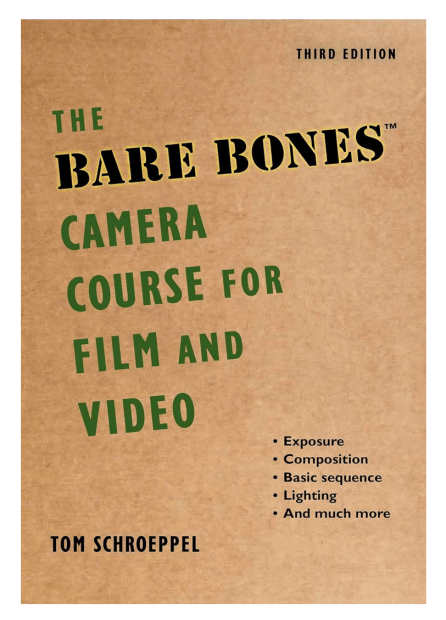
This week I also started reading The Bare Bones Camera Course for Film and Video by Tom Schroeppel. This week’s chapter was on sound where I learned about sound waves and how they vibrate. Sound waves are vibrations that travel outward. We can tell these sounds from one another by how close the waves are and how big they are. How loud the sound is, is based on the intensity of the energy that creates it.
The chapter also talked about different microphones and how they pick up sound. For film and video production, the two most common microphone types are dynamic and electret condenser. While they both vibrate when hit with sound waves and convert vibrations into electrical signals, the main difference you as a consumer will see with these mics is the different pickup patterns. For example, an omnidirectional mic picks up sounds from all directions. Whereas a supercardioid (or shotgun) mic picks up sound that is directly in front of it.
Choosing a microphone should be based on what you plan to record. If you wish to record someone talking, interview style, a lavalier mic may be best. For a documentary style film, a shotgun mic would be best since you could capture sound from a variety of lengths.
It’s also important to remember how surfaces and your environment can affect sound. A bunch of small surfaces facing different directions are porous and therefore make sound waves bounce back and forth. This effect of reflecting sound waves is called reverberation. If you need to liven up your sound, you should add hard reflective surfaces like tables or glass to the room. When there is too much reverberation, adding in a mix of different surfaces to the room will help.
While voice overs are common in most filming projects, recording presence or ambient sound is just as important. This will help with transitions from one location to another by giving context clues to the viewer. Presence is the sound between people speaking, think a car driving by or seagulls squawking at the beach. These sounds are just as important as the main audio to a film and should be recorded separately. They can then be added or mixed in with your other audio effects.
Research To Inform
The “I love Hitler” group chat: Today, Explained Podcast
This podcast starts out strong in the first minute. The sound effects of a cell phone buzzing as jarring headlines are being read brings the topic front and center. I immediately understand that this is a news podcast and that they report on current events. The almost chaotic sound effects in the beginning had me engaged instantly and it relates to the title of the episode. I also liked that the conversation between the interviewer and interviewee were able to speak and show emotion while conversing. Without knowing much about the topic, I knew what side they were on and how they felt about the whole ordeal. This episode wasn’t as formal as usual news podcasts but felt more like a hybrid between storytelling and conversational. When they jumped from different perspectives there was music playing which let me know a new opinion was being introduced. Having moody music behind someone speaking made me feel like there was anticipation and drama, which helped me listen until the end, to see how this story concluded. Overall, I think they used just the right effects and music to portray a horrific news topic that is worth talking about.
Pilot Episode: Welcome to Night Vale Podcast
The narrator’s voice in this podcast is excellent, it’s unique, adds to the spooky vibe and he is a great storyteller. They use a monologue style podcast to talk about an unusual fictional town and those that inhabit it. When listening, you’ll hear the narrator speak in a way that adds to the creepiness which helps set the scene. The music in the background also adds to the paranormal ambiance. The format of the podcast is well done, they give quick snippets of different stories in the beginning, filling us in and setting us up for the next section which goes into more detail about the main character – the scientist. While the narrator does talk about a few characters within the town he makes sure there is substantial pause between his stories, so I was able to understand when the story was changing. To me this podcast is well thought out and creates many cliff hangers that keep me hooked on the story.
From the Vault: Do Aliens Speak Physics, with Daniel Whiteson: Stuff To Blow Your Mind Podcast
This podcast opens with a sound of a creaking door, which is perfect since the title of the episode is “from the vault”. This sound effect helps me make that connection with the title and adds personality to this reoccurring podcast section. The format of the episode is a typical interview style where the author gets to talk about his book on aliens. I liked this podcast because I felt the interview flowed really well and had a good balance between staying on topic and giving us background information that related. It was a good combination between friendly banter and a more formal question and answer. I was also really impressed by the way the interviewer was able to stay on track even when the author would ask him something or go off on a tangent.
While the entire episode is a back and forth between these two guys, the flow is easy to follow and stay engaged. They talk about the book’s theme and then dived deeper into how aliens probably function, then finally the episode ends with the author recapping his theory and concluding his thoughts.
Airbnb TV Spot, ‘Be Together’ Commercial
This Airbnb commercial has been one of my favorites for a while now. The format is simple… They talk about their competitors (hotels), what they do wrong, and how Airbnb does it better. All of their commercials use the same few cords that play in the beginning, so without even needing to see the screen, I instantly know the commercial is for Airbnb. The copy created for this ad is also well done. It tells me how hotel rooms won’t work for a big family vacation and then brings up Airbnb as a solution to this problem. In just a short thirty seconds, I’m able to see the benefits of choosing an Airbnb. The commercial ends with an upbeat song which further grabs your attention and flips your feelings. It ultimately gets you to associate the brand with successful, prosperous vacations. To me, this is advertising at its best.
Create
This week I also had the pleasure of writing my first podcast episode. I decided to pick a topic that I was passionate about and also currently in the news. I chose to talk about the recent theft at the Louve and create a PSA style episode talking about art heists and the affects they leave on the larger economy and the art world as a whole. I wanted to do this topic because often this type of crime is glamorized or not taken seriously by the public. When in reality, this affects our safety and the world we live in. I plan to inform and educate listeners who may not fully understand the damages that come with this type of crime and how it trickles down to affect all of us. I then plan on listing ways we can all come together to prevent these crimes and protect pieces of history.
Some challenges I think may come up are finding good ambient sound to make it feel like I’m reporting from a museum. Since this is a serious piece, I want at least the beginning to sound official and professional. But I’m not sure what sounds would equate to being in a museum. I am also concerned if I will have time to give specific examples of how art heists have affected the world. I think it would make my podcast story stronger, but I don’t want to sound as if I’m rushing or talking too fast to fit it all in. I already wrote a script that is word for word (because this my time podcasting), but I know next week I will probably make edits to it, before I actually record.
Below is my pre-production podcast document.
 The Creative Corner