Customers are the most important part of any business. They are the main source of revenue and give valuable feedback that can help you grow. If your company cares about why some customers stay loyal while others leave, then journey mapping may help in your research. A typical customer journey map will help you find key insights into what end users really think and where pain points lie. In this article, I will go through each step in the journey mapping process and show you how it can improve your future customer’s overall experience.
Choosing A Customer
When starting to create your journey map, you should focus on a customer that’s typical for your product. If possible, use one of your user personas from previous research. This will help since you know their background, and what they like and dislike. Your map should also include stages or a timeline for the entire process. For example, purchasing something online, the timeline would be a few days from ordering to receiving, whereas ordering food through an app, would be a few minutes. Be sure to include stages like how they decided on or found your brand and then how they felt after the purchase.
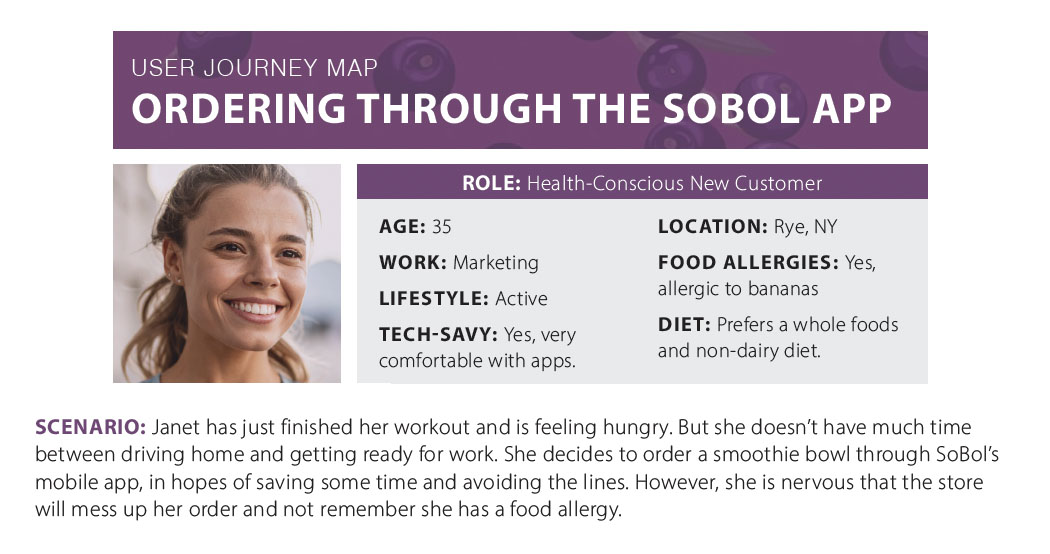
Next to the persona, you should also include a short scenario. This will give you more detail into the situation and give context to your imagery. Since most maps rely on bullet points and short descriptions, your scenario can help set the scene.
To stay with the food ordering example, below is the user’s persona and scenario that I created for a typical customer ordering through the SoBowl app.
Actions and Channels
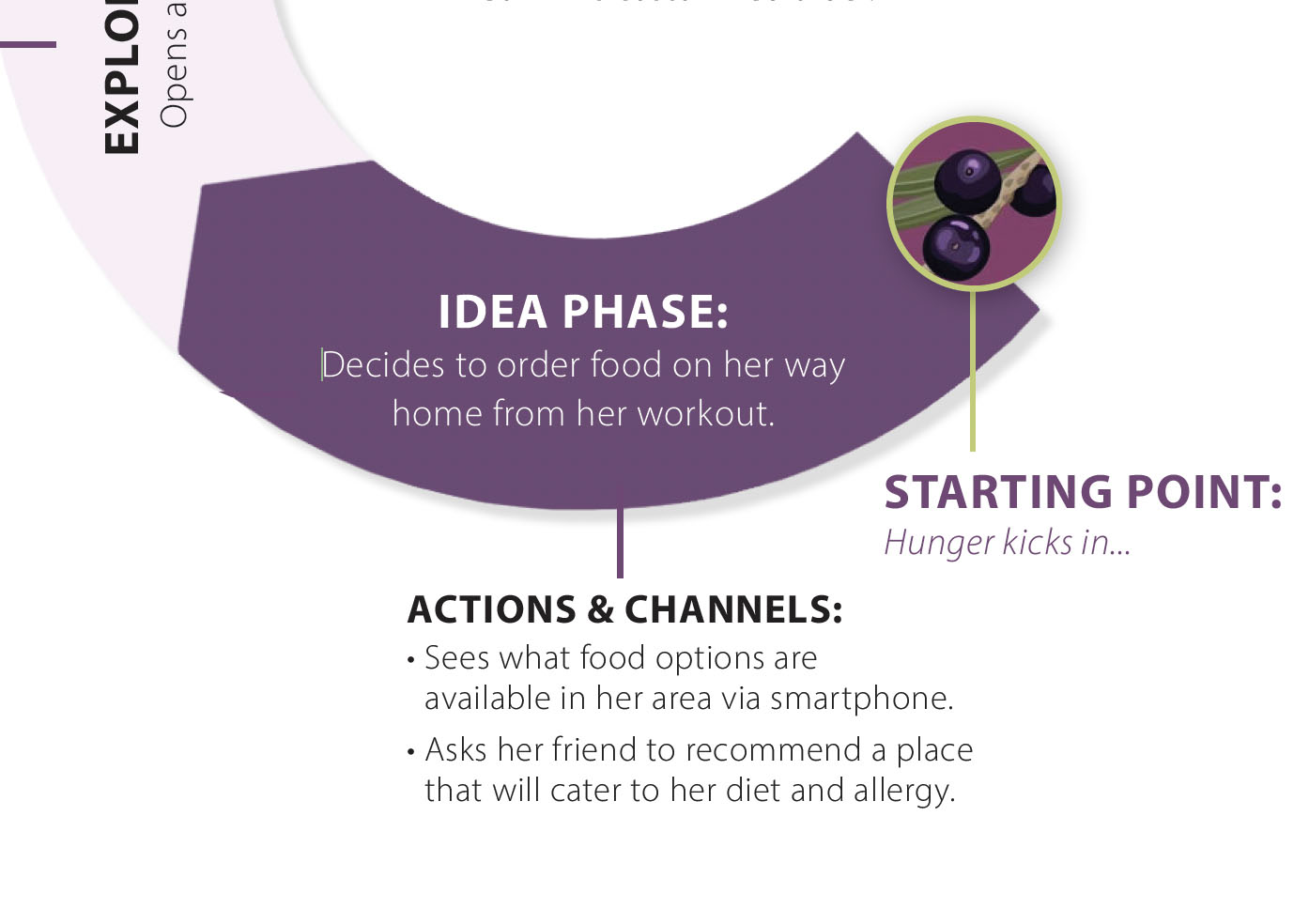
The most important part of the journey map is describing the actions the user is taking and the channels they are interacting with. This may sound confusing at first, but you just need to be detailed and describe EACH step until the very end. Showing what the customer is doing should be accompanied by where they are doing it. Is it on their phone, are they in person at a store? All this detail will be different depending on your product and customer. When talking about channels, give detail about what part of the organization the user is interacting with. Since there are many sides of a business, your map should detail the connection the user has with the company. Below are the actions and channels for the first phase of my map.
Thoughts and Emotions
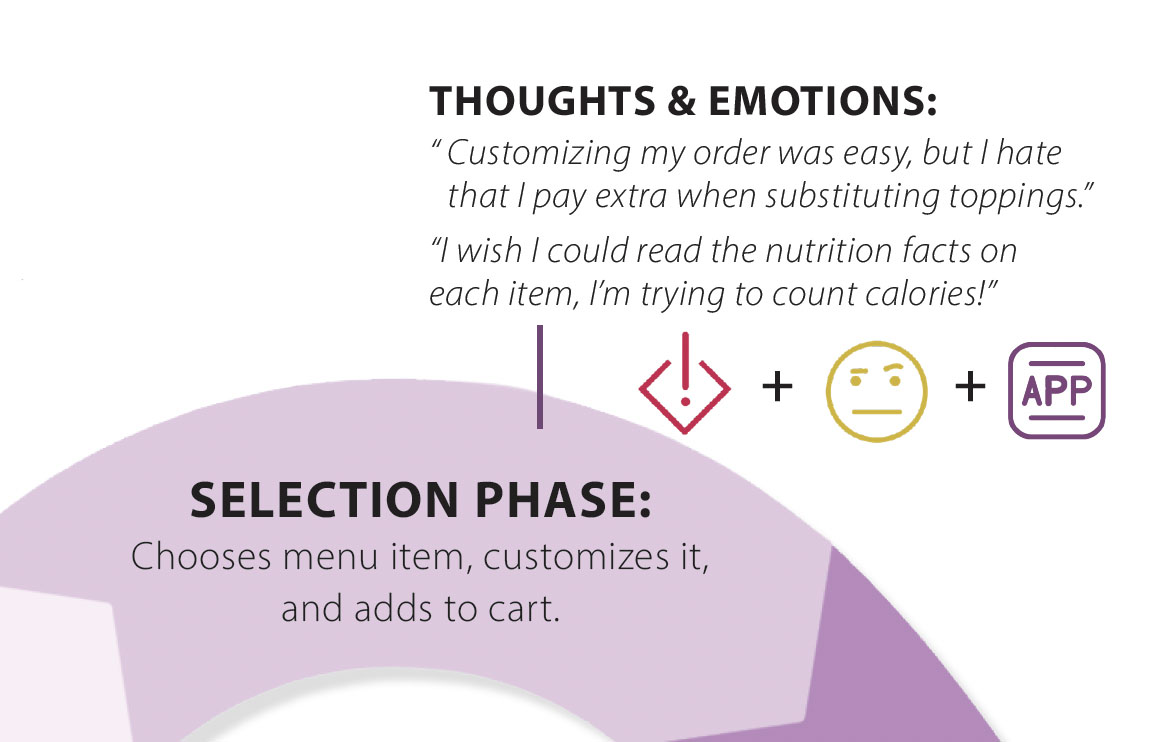
Also included in each step or phase should be the thoughts of the user and their emotions during this stage. These are important because emotions significantly influence customer satisfaction and overall loyalty. If you can find out where users are least happy in the journey, you’ll be able to identify the problem and figure out a solution for this hiccup. Include quotes and all feelings the user has about every interaction. This will help reveal places that need improvements and steps that work seamlessly. For my journey map, I included quotes that describe the customer’s thoughts and feelings in that moment and included a feelings chart to specifically show certain emotions. If you also use symbols to describe something, be sure to include a key/legend as well, so that the people viewing the map can decipher.
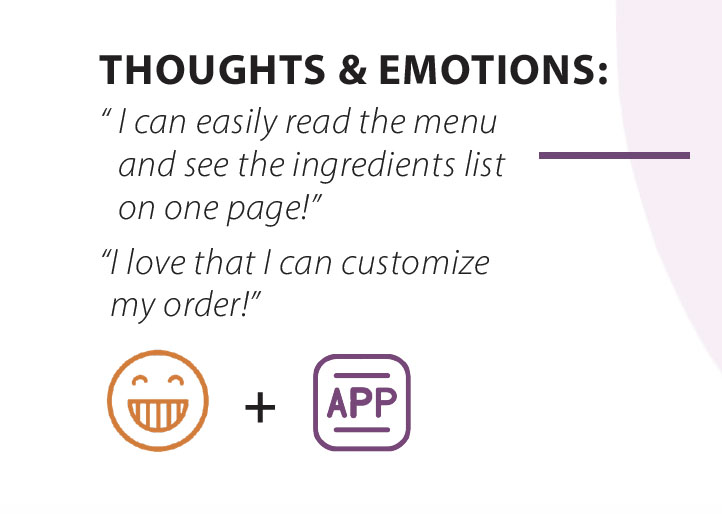
Above is an example of my SoBowl customer’s thoughts and emotions during the exploration phase. As you can see, the key below helps to explain the icons, showing user emotion as well as the touchpoints in the journey.

Pain Points
Your journey map doesn’t always have to show a successful purchase or positive experience. In fact, most maps are going to have what we call pain points. These are when users’ stumble across a problem that leads to low satisfaction or frustration. Your pain points should be called out on the map and easily identifiable, this way viewers can see where and how something went wrong. Most of the time, a pain point will line up with sad or angry user emotions. This means that when imagining the issue at hand we have to have empathy with the user, to really feel what they feel, and to imagine how this affects the product’s appeal.
In my own journey map, I had two consecutive steps that had pain points. The first was the selection phase where my user was trying to substitute toppings but was getting frustrated when she was getting charged as if she was adding toppings. Then in the purchase phase, she couldn’t find a nutrition list before checking out. Even when she continued to check out, she found the process to be too lengthy and had to click through too many screens before finally paying. With these two steps back-to-back, many users would just give up completely or order in store. So these app issues should be fixed as soon as possible.
hit a pain point in the checkout process.
Listing Improvements
As with all customer research, there should be space for listing improvements and explaining how the business or product can improve. With all the information gathered, you can begin to align customer wishes with business goals. Hopefully changing user pain points into an enjoyable experience. This new idea should be highlighted somewhere on the map so that the company can visualize next steps and be better informed going forward. At the end of the day, creating this journey map was to highlight the customer journey, their difficulties and ultimately find solutions to fix them. So, this last step is very important.
In my own map, I listed the pain points, their location in which it occurred, and the improvements SoBol could do to their app. The first improvement being to stop charging users when they substitute toppings. The mobile app should know the difference between adding toppings (where it’s ok to charge) and substituting toppings (where users should not get charged). This extra fee probably frustrates long time users, knowing they can get it cheaper if they order in store. For the second improvement, the menu should include a nutrition list, so that users can go from looking at it to placing the item in their cart quickly. The overall checkout process can also be shortened with less screens to click through.
Concluding
Understanding your customer’s journey from start to finish can give you a clear view of why users are praising or cursing your product. The stages in your journey map can give you insight into personalizing and perfecting the steps for each customer going forward. It also takes into consideration their emotions throughout the whole process. With each improvement you do, you can build a product that fosters a lifetime relationship between your customer and business. The next time you need emotional insight with your data, consider a journey map to help you see the how and why of user interaction. The benefits are substantial.
Take a look at my full journey map below for inspiration!

 The Creative Corner