
Looking for a way to make your product standout from the rest? Creating a comprehensive persona may be just what your team needs. Personas can show your team who they are creating for and what type of people are using their products. Personas are fictional but can then be based on research. This means they can start out hypothetical but then become validated, based on the findings. Most importantly, creating these personas represent different user types and can pinpoint what your user needs and what they struggle with.
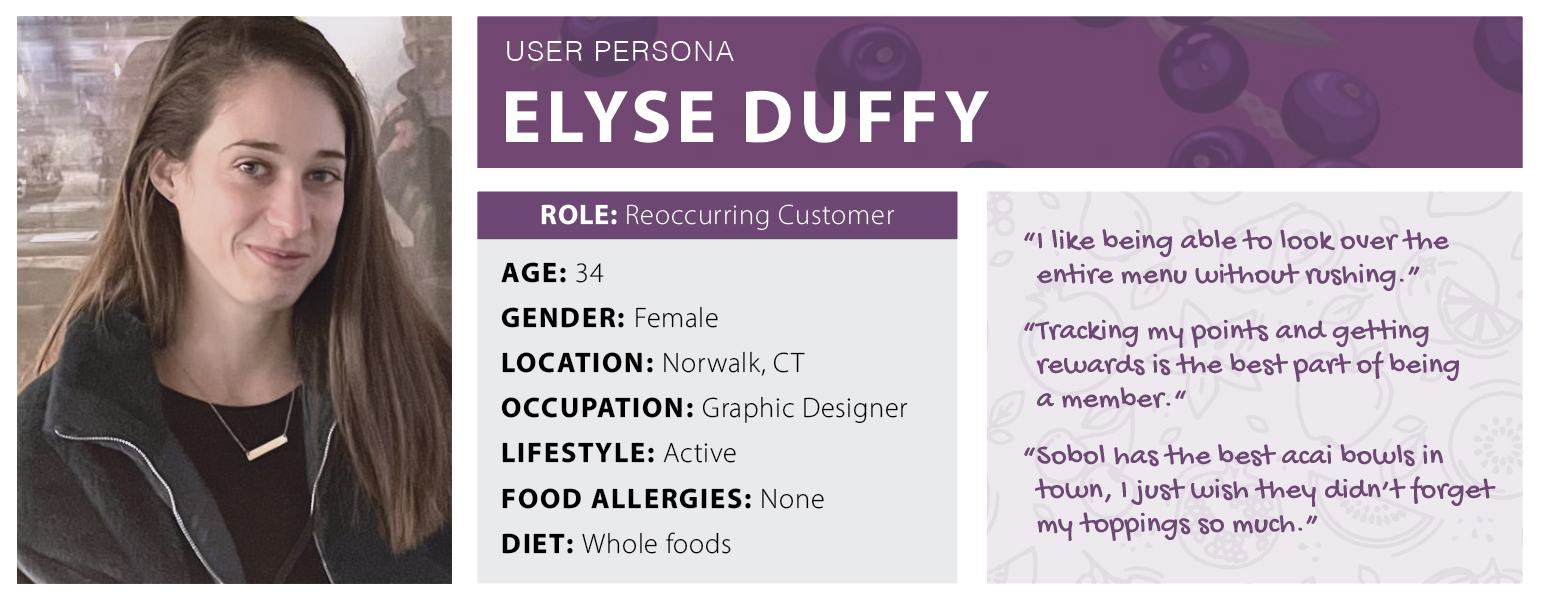
To walk you through how to create a comprehensive persona I will use myself as a user, using the Sobol app. Sobol is a health food, acai chain, and since I am a loyal customer, this should be easy to put myself in this position. For your product, you will probably want to start interviewing and gathering data on your usual demographic to get a basic understanding of the people you design for. From here you will start to see trends in the data, allowing you to start creating the fictional people/personas that would interact with your product.
From here, I will break down the important categories I included for my persona and why you should also include them, regardless of the product you advertise.
Demographic Information
Starting out with the basic information about the person, like name, age, location, and education are all important to include. This helps refine your area in the market and narrow down your customers. For certain products, for example customers using the Sobol app, you can include more specific information like food allergies and maybe dietary restrictions. In this section you can also write down some quotes your user says. Just make sure its relevant.
Goals and the Journey
Stating the goals I have as a user is necessary in my persona because it will reveal my desires about the app and surely show my feelings towards it. The key here is to think broadly and think a bit beyond the product itself. Listed in my persona, I put that I want time to read the menu thoroughly, I don’t want to be rushed by the cashier or the person behind me in line. Looking over the goals of each user will get you closer to how you can tailor your product to them. Which leads us to the journey…
The journey to get your user to their goal is also something to record in your persona. In this section, explain briefly how your user is achieving their goals currently. You can also note why they are frustrated or satisfied in these areas. Going back to myself as a Sobol customer, under the journey section, I mentioned that using the app is helpful to me because I can casually browse the entire menu from home and also use social media to keep up with the brand.
Motivation v. Ability
My favorite part of personas is to use charts and graphs to show data. One way to use this data is to create a motivation verses ability graph. Here you’ll be able to see how motivated your users are and how easy or hard a task is for them. In a perfect world, the task would be extremely easy and therefore require less motivation from them.
In your research, whenever a user is stumbling or getting frustrated, note how they maneuver around it and if they felt the reward was worth figuring out. This data will provide insight into how to fix the issue.
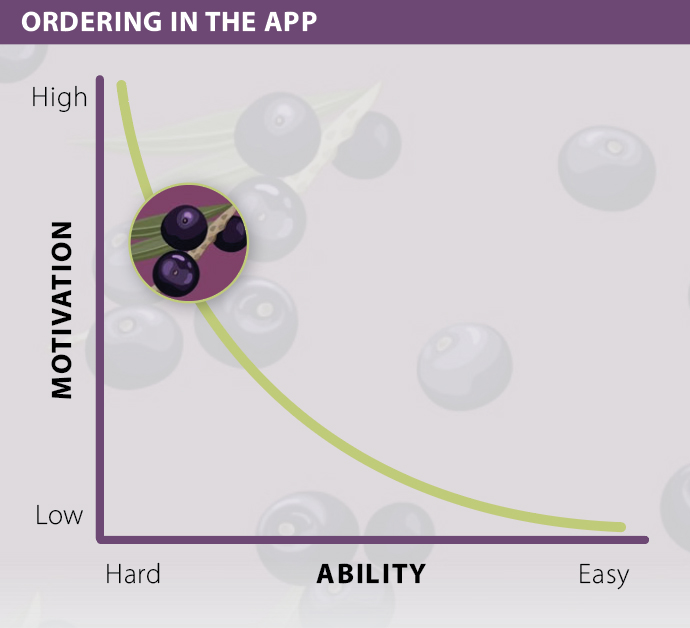
For my persona, I tested how I felt about ordering through the app. While the process of ordering and checking out was a bit lengthy, the motivation was still high for me just because I am a loyal customer and I truly love Sobol. While normally ordering through the app would save me time, the hurtles of a long checkout and the uncertainly that my order wouldn’t be made right were all things I had to think about. Under the graph I also included possible triggers that would help me complete my purchase. When doing your own, be sure think of all positive and negative factors that could help or hurt your user.
Environment
Up next is environment, a place where you can craft stories that show where your product is being used and how. For my Sobol persona, the example below is one way I use this app and its reward’s feature.
Elyse is on the couch doing her monthly budgeting and is bummed out that she has overspent. But she gets a notification from Sobol that she has reached her next reward! She quickly orders from the app, knowing that this treat did not break the bank.
Influences
Knowing who your users interact with often is also something to consider for your personas. At first you may not think these people are worth the time, but with the right research you’ll soon learn just how impactful relationships of all kinds are. Common examples are how a mother influences what her children eat or how a partner may influence your decision on where to move.
In my own persona, I listed my boyfriend, a close friend, and my father as top influences on my life. While we may not realize it, their actions and decisions affect what we do and how we will interact with your product.
A Persona Family
Knowing how one persona relates to another is the last step in creating a comprehensive persona. Hopefully with all the research you did, you were able to make more than one persona so that you could group them within a persona matrix. Visually seeing how personas relate to one another is a great way to see if you reached a variety of users in your research. This visual can also help you see qualities that appear often, and which qualities are one offs. Some users that you may have thought were different, may actually have the same goals and will be closer together on the matrix.
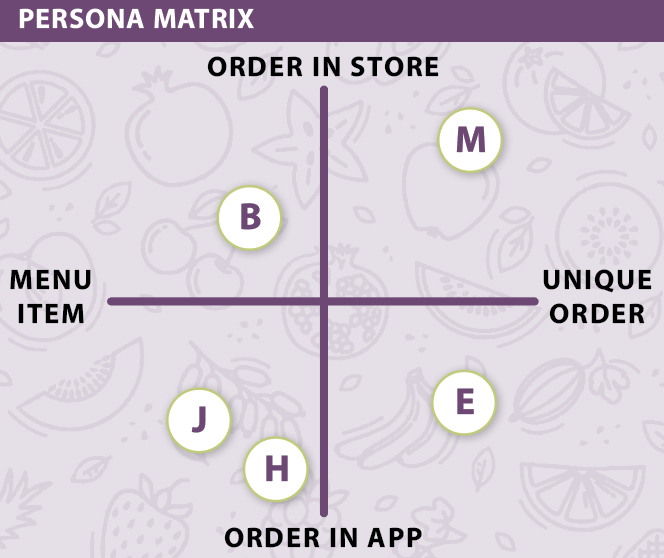
For my Sobol persona I was also able to make a second user that would represent the typical new user for the app. I named her Janet and she was a new customer that was health conscious but also had a lot of food allergies, so she was hesitant about ordering through the app. However, because of her diet, she also liked the customization options when ordering and loved getting to see the full menu in the app. She was actually much closer to me on the matrix than I thought, but also brought enough differences that she represented a whole new customer base.
Concluding
While some personas you see out there may not include all this information, being detailed and including as much as you can will always be more helpful in the long run. Comprehensive personas are lengthy but are a must after doing user research. As you go through this process and refine, you may find that key details on the persona may have to change and that’s totally okay. At the end of the day, your persona should help you go from spotting issues to refining a better user experience.
My final comprehensive personas can be found below, enjoy!

 The Creative Corner