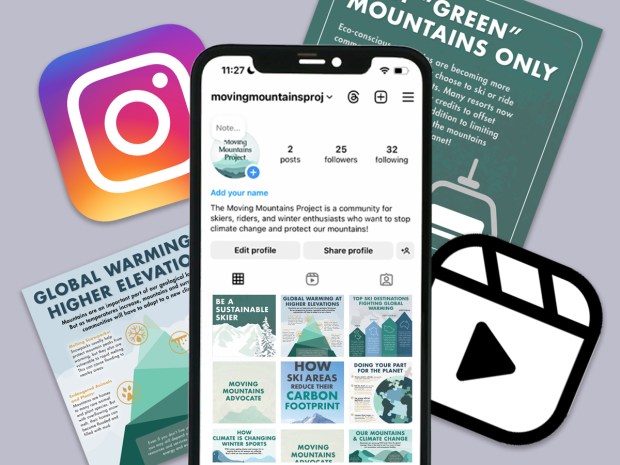
The end of summer is upon us, and I am starting to reflect on all that I have accomplished in the past weeks. While this summer was surely my busiest, I feel proud to end it with a successful social media campaign to show. As most of you know by now, I am the creator and founder of the Moving Mountains Project. This project was a passion project and it’s a topic I care very strongly about. Climate change and its impact on our winters is not the prettiest of topics but it is a subject that affects us all. Between global warming and extreme weather occurrences, the Moving Mountains Project is a platform that everyone should follow. Being educated in what is happening to our earth is the first step in fighting this global problem, which is why I felt the need to start the campaign and have my voice heard.
Not only do I feel the need to speak up about this topic, but I wanted to create a community for skiers and snowboarders to come together, to talk about how we can all do our part to fight climate change. It was important to me use my Instagram platform to not only shed light on the topic but to relate it back to people who love winter sports and want to protect our mountains. This was challenging at first, but I found many sources talking about this very idea. One Podcast by Science Friday, “How Climate Change Is Changing Sports” was very insightful by bringing on a sports ecologist. She mentions that when conditions are bad and combine with little snowfall, less ski runs tend to be open on the mountain. This means that the runs that are open are very crowded and thus leads to more collisions. Even late in the season, when there is a bit more snow falling, it’s usually just falling on frozen ground instead of snow. This causes the snow to slide, which then causes avalanches. This was a full circle moment for me, because I certainly felt the dangers of crowded ski slopes before and noticed that almost all our snow fall is much later than it used to be. This means that climate change has already been responsible for many injuries and deaths. While I hope my fellow skiers and riders can’t relate to this too much, I know it is important information to speak up about, knowing they are around these dangers every season.
As I read more and more about climate change and its impact on our mountains, it forced me to think about another topic. That was: what the ski industry will look like in the coming seasons. This is something I have always wondered and have even talked about with my friends while skiing. Would our sport hold on and be around for our children, or our children’s children? Should we worry about having to choose between enjoying the slopes or being ethically responsible? What I found was more promising than what I had originally been told. Resorts all around the world are finding unique ways to do their part to keep snow on the slopes while limiting their greenhouse gas emissions. The Climate Question Podcast had an episode called “Can The Ski Industry Survive Climate Change?” which talked about how many ski resorts have already closed because it simply too expensive to continue operations under these changing climates. But others, that are adapting to the future are for example using “waste heat” to heat parts of their resorts. Other mountains are dedicated to only being open when getting enough natural snow. Some are even transitioning to 100% solar energy. This is great news for anyone looking to choose their mountains more selectively and a great way to support mountains that support fighting climate change.
While sources I came across were sometimes vague about what our future could look like, I found this Youtube video from the World Economic Forum that inspired some of my designs:
What I admired about this piece was that it goes straight to the point about our planet and what it would look like if we don’t change our patterns. As expected, ice caps would melt rapidly, coral reefs would become extinct, and water scarcity would become common. Some would probably find this type of video frightening, but I find it refreshing to hear facts straight, and I even tried to emulate this style of video on my own platform. I felt this type of short form video really helps the viewer to quickly absorb the information. Making it quick and easy to read was my overall goal for my campaign and looking back, I believe I can say that I accomplished this.
In my Instagram grid (pictured below), you can view the videos that are similar to the YouTube one above and view all the other content in detail. After designing each post, I would paste them into these squares which would show me what my grid would look like. This kept me accountable to creating a “look” for the campaign, which was important for me since I wanted it to look professional.
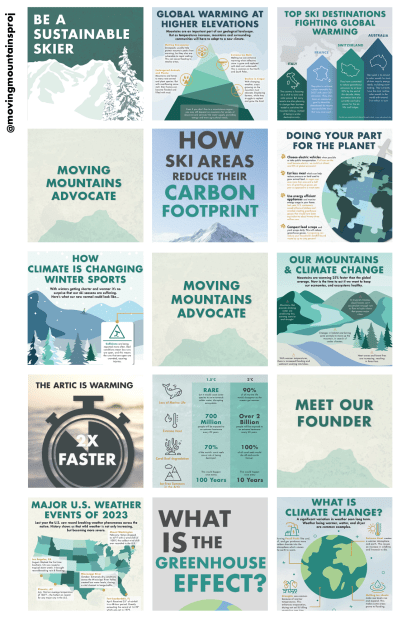
Overall, I feel that my grid’s style is strong since I use the same fonts and colors, as well as varying my content from images to videos. The whole platform feels very organized and is recognizable, which is important in a time when there are so many other campaigns fighting for your followers attention. Now that my project has come to completion, I strongly encourage you to visit my Instagram Page for the Moving Mountains project and to see all the final content live and if your interested in the complete breakdown of project’s process you can visit my page here. Please follow along as we continue to post about climate change. We may have just been getting started, but we certainly don’t plan on stopping!
 The Creative Corner